
THE ODYSSEY
And Jon Warner's Seven-League Boots

Hi friends - I keep thinking about The Odyssey, (last week I shared some things it provoked me to think about) so my thoughts shared below are likely to evolve. But a week after seeing it for a third time, and a day before my fourth viewing, what’s fascinating - and exciting - to me is that there is a genuine public conversation about the meaning of a movie. And even though people (including one of the source text’s most recent translators) are expressing wildly divergent opinions (I’m not sure why anyone is surprised), I want to offer the possibility that there are profound depths being called forth by this film, even if you think the film itself may not match their profundity. There is an enormous story being told all over the world right now about a man regretting his mistreatment of others, the lies he told, and how he allowed dreams of tribalist glory to overcome the law that part of him knew to be most sacred: to treat others as you would want to be treated. This is a burning light, a fire to be tended.
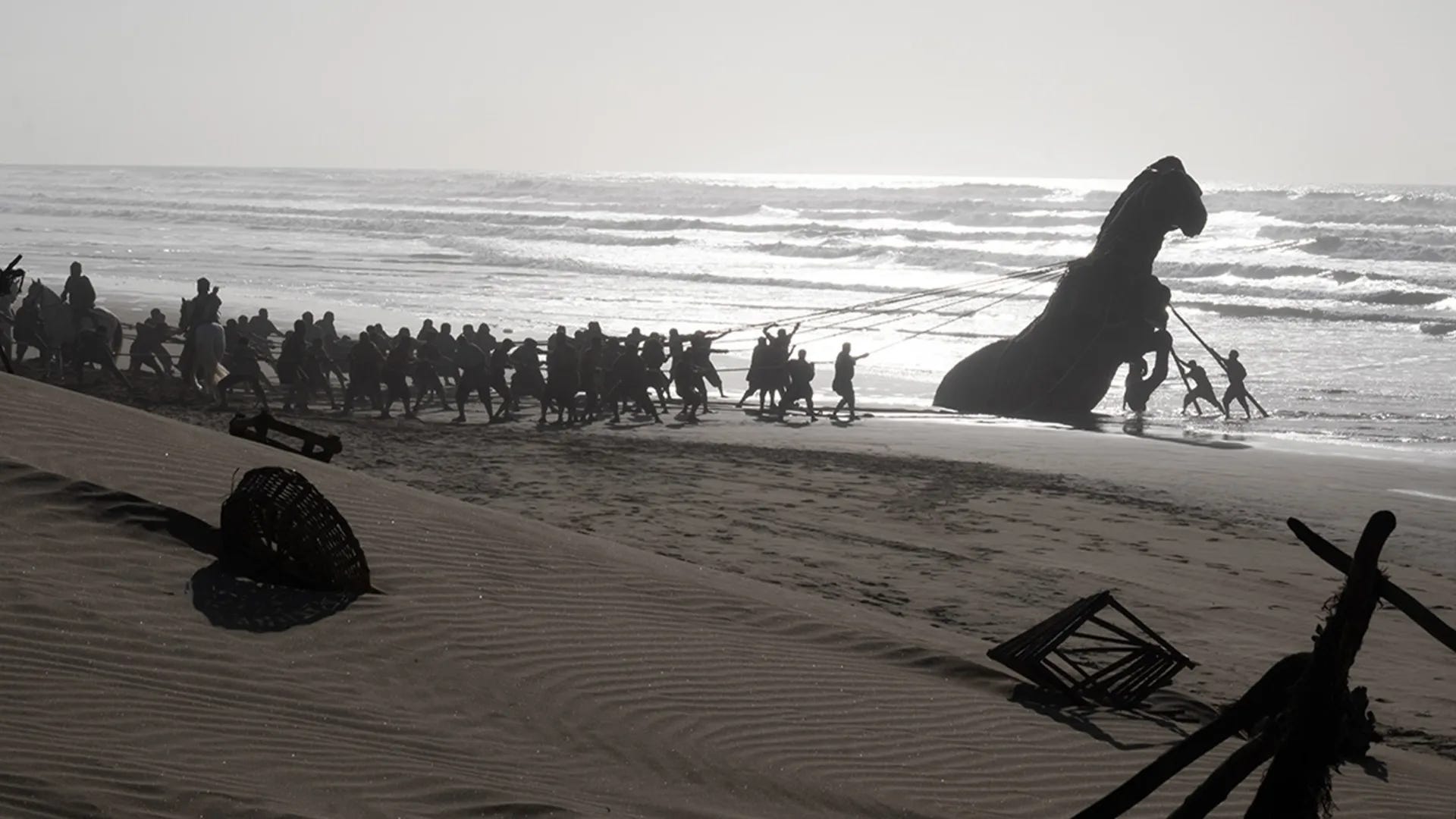
An old priest once said to me that his only hope was a return to what he called the hard gospel. To my mind, raised in a culture in which religious fundamentalism often overshadowed the golden, life-giving and revelatory nature of authentic spirituality, his seemed like an unfortunate turn of phrase; so I asked him what he meant.
It’s not that you don’t say fuck
And it’s not that you don’t sleep with your girlfriend before you get married
It’s that you love God and you love your neighbor as yourself
End. Of. Story.
He banged the table with good enough effect that twenty-five years later I can still hear it.
He might have added that the hard gospel doesn’t mean that you coerce others into pretending that they believe what you do, or that you prefer the poisonous swarm of collective ego that manifests in sectarianism or tribalism, and certainly not that you aggress upon people who are not engaged in harmful actions. It is entirely possible to develop a social structure rooted in the laws of love (which quantum physics and theology, biology and poetry seem to tell us are synonymous with the laws of the universe). Geopolitics does not have to be about mutual enmity or even suspicion. It can be about the hard gospel of sacred hospitality: where we call forth the love of others by treating them as we would want to be treated ourselves.
This vision is not gullible, but when offered from a place of making the strong choice to let go of selfishness, separatism, and scapegoating, always willing to protect the vulnerable, and inviting a good measure of the wisdom of serpents along with the gentleness of doves, sacred hospitality is actually a gorgeously sophisticated diving into the truth of what human beings really are. What life really is.
Anyway, back to Homer.
The first question many people are asking about The Odyssey, Christopher Nolan’s truly epic adaptation of Homer, is how faithful it is to the original. My answer begins with a gentle push back on the premise of the question: how much does it actually matter if something is faithful to a prior text? To call upon another ancient teacher, Hippocrates shifted the common understanding of disease as having physiological rather than otherworldly roots, and we gave his name to an oath that should guide anyone in a position of authority (though it was actually others who coined the idea of do no intentional harm); yet he also believed that illness could be attributed to four humors which don’t actually exist. Relying on what Hippocrates thought is not going to help clear a common cold, not to mention more serious conditions; but extrapolating from the core ethical notion associated with him could serve us well, even if he didn’t write it. There’s value, of course, in getting as close as possible to historical information about the story of Hippocrates, but biographical data doesn’t exhaust meaning.
So it is with The Odyssey, whose “accuracy” I’m not qualified to assess. But I do know something about life, and about movies, and about storytelling, and this movie, about this particular life, deserves sustained attention for what it says about storytelling. I’ve seen it three times in four days, and I’ll see it again, not because I “love” it, but because of what it loves. That beautiful idea, first shared with me by the critic Jeffrey Overstreet, is a good guide to thinking about art generally. This is true even if it’s not clear what the work loves; and in this case The Odyssey more than most films of its scale is eliciting hugely contradictory responses.
If, like me, all you know of the poem is that it’s about Odysseus, king of Ithaca, taking two decades to first fight a war and then get home from it, facing obstacles along the way while his wife fends off suitors who think they’re entitled to her body and their island, that’s all you need to know. Nolan’s version has characters speaking in the vernacular and with US American accents; he overcomes the distance created by the habit of Hollywood epics to have ancient Greeks speak like mid-twentieth century English aristocrats. This method of bringing things down to earth means that the baneful magic of Circe (who in a striking piece of psychodrama turns men into pigs to illustrate the genuine horror of unbridled appetite married to coercive power), the cave-violence of the Cyclops, and the dead emerging from the black sand of Hades feel more real. A film clearly influenced by Clash of the Titans and Jason and the Argonauts avoids the borderline camp of those two by making wounds look like they’re actually bleeding, the sea like it’s made of metal, the way it often does.
Some have said that what’s missing in The Odyssey is the presence of the gods. Odysseus is (initially) a skeptic, but Athena (whose words and even gaze seem to be the distillation of Nolan’s vision; played with steely authority by Zendaya, the best actor of her moment) points out that you don’t have to hear God speak in words. The sacred is present in pain, in thunder, and in the most tender moments too. Zendaya’s casting is part of an inclusive representation tapestry Nolan weaves that could be called aesthetic activism of an utterly benevolent kind; and the way her character of Athena is a projection of a human whom Odysseus saw on the worst night of his life - a much worse night for her - is the most morally intense moment in the movie. Casting Elliot Page, a physically slight trans man, as Sinon - the young solider left behind with the Trojan Horse - and whose first words in the film are “A gift” is politically groundbreaking. (Although Page shouldn’t have to shoulder the burden of revealing to the mainstream audience that transformation is often not only necessary, but when people choose to share their evolution, it can be an offering of deep, even sacrificial, generosity to others.)
The rest of the company are immersed - Samantha Morton’s Circe is sinister and pitiable; Charlize Theron makes Calypso a broken dream; Himesh Patel as the at-risk best friend of Odysseus carries the projections of those of us who sometimes wonder if we are being led astray; Anne Hathaway gives weight to the lonely empowerment of a queen who knows her throne might actually have nothing holding it up; Tom Holland does coming of age brilliantly; Robert Pattinson is completely believable as a villain motivated by shame; the magnificent Bill Irwin fully present in a very difficult role to make into something other than a caricature; and the absolute standout is John Leguizamo’s blind servant Eumaeus. But Matt Damon anchors the film in one of the all-time great portrayals of ambivalent heroism. This Odyssey is, in the end, a profound treatment of the most important questions human beings must face: who are we, what are we for, how should we treat each other (and ourselves), what stories will we tell?
I can’t easily recall a Hollywood blockbuster in which so much change happens to the protagonist. Nolan is famous for the way time overlaps and re-invigorates itself in his movies - we feel the two decades elapse, turn back, re-start. Odysseus is learning as he goes, and when all is said and done (and trust me, a lot gets done, to a lot of people), like the rest of us he is different but the same. The signature of this Odysseus is to twang his bow before a hunt, to warn a target; he’s embodying the law of Zeus - a prototype for doing unto others as you would have them do unto you. But his commitment to reciprocal welcome is shaky - Odysseus’ impetuousness and unintegrated is seen to cause nothing less than mass killing and the death of his friends. And after twenty years of pillage, the monstrosity of what ensued his failure to follow that law - “turning a fight into a hunt” by pretending the horse that hid murderous intent was actually a present - has become undeniable. The moral injury is enormous; the guilt unbearable. So he gives himself to the sea - to the care of the gods - and lets go of his obsession with control, with winning. This is what we all must do, sooner or later; better if it’s sooner, or at least better if we start sooner - although the grace of truthful storytelling says that it’s also never too late to accept responsibility and try - falteringly - to begin a life of repair.
That’s more optimistic than the ending of this immense, challenging, compelling movie, which laments the collapse of a civilization, and intends to warn the audience about that same potential for our own. The stewardship of a people, of a planet, requires leaders who know how to use swords but refuse to do so in aggression. Cultures can disappear, but songs will still be sung. Truth-seekers will sing that swords are not the heart of life, hospitality should be. Our mythic spiral is supposed to confront us with a warning that when we violate the sacred worth of another, what we’re actually doing is killing God.
I’m really delighted to share our dear friend Jon Warner’s latest essay - an insider view of reflecting on what it might mean to treat ourselves as we would want others to treat us.
Seven-League Boots
For the first time in a long while, I found myself out of work. In the beginning I took it as an opportunity to catch my breath and get my professional bearings straight. As I searched for new opportunities I spent time with my kids, did projects around the house, and worked on my health. But as days turned into weeks, and the weeks turned into months I began to get nervous. I had many interviews, and many rejections. I had time on my hands in plentiful amounts, but no clear destination. I began to feel like a wanderer in a strange and daunting place. And as my time of unemployment grew, I began to feel lost, and a creeping self doubt became a constant companion. Wandering has always been hard for me. Well, “always” is a strong word. I think as a very young boy I could wander. I remember lazy summer days, the cuffs of my jeans filled with burrs and stickers. My pockets stuffed full of interesting rocks, or string, along with the Old Timer pocket knife my dad gave me. The purpose that filled my heart was to see what was over the hill, at the top of the gully, or across the canal. With dirty hands and mussed hair, I climbed trees and jumped down draws into shallow rivers of runoff from the snow. I felt safe in that space. Ambling through hot days and star-filled nights, knowing my folks were at home, there was dinner on the table, and books and comics to read by my comfortable bed.
I don’t know when I exchanged my pocket full of magic beans for cold, hard cash. I can’t remember the exact date, and I don’t think it happened all at once. I gave up a few beans to take a summer job, to get enough money to go to the movies or buy a couple of Big Macs. Then life thrust its hand into my pockets and took a few more.
Maybe more than a few.
I was flying down the newly paved road in our neighbourhood. The steep incline was thrilling, and the thin skateboard under my sneakers vibrated despite the smooth new layer of asphalt beneath its wheels and trucks. I carved big S-shapes back and forth across the road. Mailboxes flew past in a blur, and I was laughing for the sheer joy of the speed. My hair streamed back behind me; helmets were not even a consideration in those early days of the ’70s. I knew, with the surety of youth, that I wasn’t going to wipe out, that no cars would suddenly appear, that a boy hurtling down a steep road was as impervious to harm as a young Hercules. I shot out of the hill, cutting across the road and into a driveway, letting my momentum carry me down the sidewalk. Friction on my wheels bled the speed from my wild flight, and I eventually had to push, my foot boosting my flagging momentum. I was eager to get home, have a snack, see my brothers, and tell them about the truly excellent ride I’d had on the way.
But I could see from a block away that something was wrong. People were running up to my house and back again. Our neighbour’s old Ford pickup was at the curb, doors open. My oldest brother was being carried into the truck, the leg of his jeans torn and soaked in blood. It was on his hands too, and his face was terribly white. My neighbour’s face was frozen in a rictus of fear, all the colour drained away down the cords of his neck.
“What happened, what happened?” I yelled as I abandoned my skateboard and sprinted to the truck.
“I’m okay, Jonny. Mr. Pope is going to take me to the hospital. Tell Mom.” The door slammed closed and they sped away. I watched, numb and uncomprehending. Tears streamed down my face. Mrs. Pope had her arm around me, but I couldn’t really feel it.
“Matt is going to be all right,” she was saying. “He just cut himself on the bumper of our car.” My eyes followed her pointing finger by default. I saw their old Chevy, the colour of pale green I would later associate with port-a-potties and mental hospitals. The old chrome bumper was dripping red, the rust spots camouflaged by the spray and spatter of my brother’s blood. How could this be? We don’t get hurt; we don’t bleed beyond the scrapes and cuts that come with a boy’s life. Yet my mind kept re-playing the scene, unrepentant and real. Matt’s pant leg soaked through. Blood everywhere, more than I had ever seen. How could one person bleed so much and not die?
The question pulled more tears from me, and I cried in earnest.
The comfort and kindness of neighbours held me up until my parents arrived. My brother came with them, his knee stitched and heavily bandaged. And the grown-ups were right: Matt was okay. He carried a thick, twisting line of scar tissue forward, but he healed. Our wounds eventually close, mended, leaving their marks. My skateboard gathered dust in the garage for the rest of that summer. I had learned a terrible secret, a lesson in danger that lived close, that simmered in the very pot we ate our eager, savoury summer meals from.
That lesson only gained power later, a few summers on, as my brother’s life drained away completely. The rules of loss sank deep into the soil of my being, far deeper than anything else that had penetrated my young psyche. No one is safe. We all get harmed in this life, this tale told by our unreliable narrator. And even when you think you’re safe, that is probably a thin veneer over a yawning chasm.
Step
Carefully
The magic beans left to me had lost much of their lustre. I traded them for lotus leaves, and that kept the monsters and demons away for a while. After that, I don’t recall wandering into hills and valleys in carefree adventure. I knew that when things get bad, they can get unbearably bad. I traded my Seven-League Boots for something more sensible and sought safety in being part of big things; organizations and companies that could weather storms and shelter me from the harsh light that shines down on the good and the wicked alike. That became long chapters of my life.
The problem with that kind of safety is that chapters inevitably end. Life changes as we age and grow, and the thread of our narrative takes unexpected turns. When that structure is pulled down around us, when our enemies lay the land barren, sowing it with the salt of our own tears, what do we do? I dithered. I wanted safety and was unwilling to put on my old sneakers and venture into the hills; not wanting the scrapes, the thorns, the falls. I had forgotten the thrill of jumping downhill and splashing through rivulets of cold snowmelt—the joy of speeding along a path, wind in my hair, laughing at simple exhilaration. In the forgetting there is a great loss, a diminishing of the spirit that is agony itself.
Reaching into my pockets, I hope to find a magic bean or two among the crumbs of lotus and the ragged tears in the cloth of me. I am reminded of Shel Silverstein’s invitation that has followed me down the corridors of my life:
“If you are a dreamer, come in
If you are a dreamer, a wisher, a liar,
A hope-er, a pray-er, a magic bean buyer...
If you’re a pretender, come sit by the fire
For we have some flax-golden tales to spin.
Come in!
Come in!”
Closing my eyes, I can almost feel that wind on my face, hear the growl and scrape of those wheels as my arms fly out and, once again,
I
Fly
With over 20 years of leadership experience in the games industry, Jonathan Warner is a storyteller and seasoned studio leader passionate about crafting compelling narratives. His work has reached millions of players worldwide, and he is proud to have been nominated for a BAFTA for Toy Story 3: The Game. Jonathan is continually driven by a love for storytelling and a curiosity for new challenges in the gaming industry. He lives in British Columbia, Canada with his wife, daughters, and dog.
“you don’t have to hear God speak in words. The sacred is present in pain, in thunder, and in the most tender moments too.”
Very well said. The film requires several viewings, if possible. You might also love the recently released, brilliantly written book called, The Wisdom of the Odyssey, by Phil Cousineau. Phil was my pilgrimage guide through western Ireland and a passionate mythologist and writer. His book, perfectly timed with the film, will deepen your experience and wonder with the story and the film. Ruth Bresson